
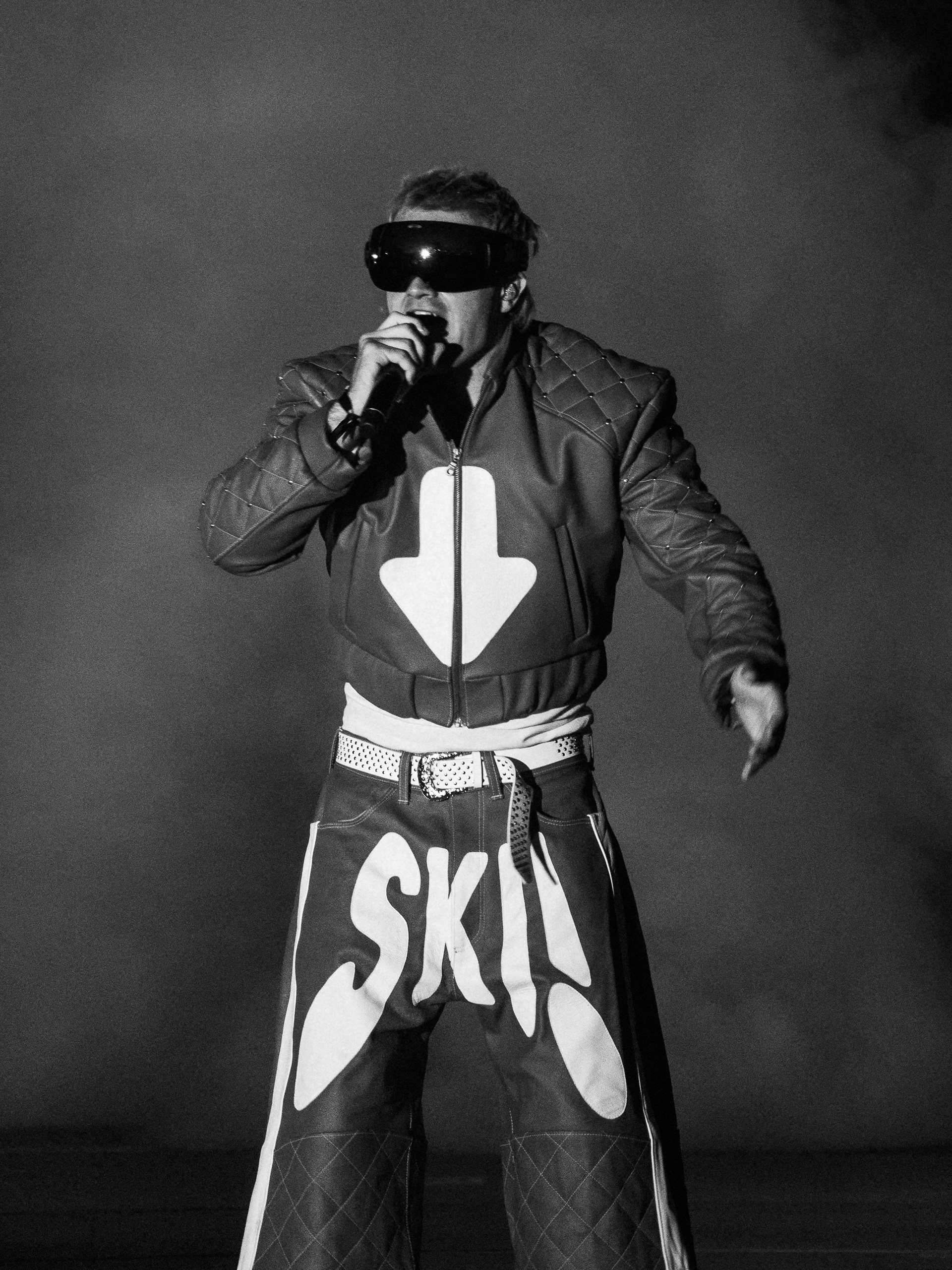
More Than a Festival: What splash! 2025 Revealed About HipHop Today
For four days in July, an old industrial landscape in eastern Germany once again transformed into one of the most important meeting points for global HipHop culture. The splash! Festival 2025 was not simply a showcase of popular artists — it functioned as a snapshot of where HipHop currently stands: culturally, politically, and socially.
What became clear almost immediately was this: HipHop today cannot be reduced to a single narrative. It exists in parallel realities — underground and mainstream, playful and confrontational, deeply personal and explicitly political. splash! did not try to unify these contradictions. Instead, it allowed them to coexist.
A Culture That Refuses to Stand Still
Walking through the festival grounds, the diversity of the crowd mirrored the diversity on stage. Generations mixed freely. Styles clashed and overlapped. Conversations jumped from production techniques to social responsibility, from industry frustrations to pure love for the art form. What began in the late 1990s as a small, almost experimental gathering has grown into a cultural institution. Not by smoothing out HipHop’s edges, but by constantly adapting to its evolution.
HipHop’s strength, splash! 2025 demonstrated, lies in its refusal to remain static.
Opening Statements: Pressure, Performance, Presence
The festival wasted no time establishing its intensity. Early mainstage performances already carried the weight of headliner energy. UFO361 set an aggressive tone, turning open space into physical release. Moshpits erupted not as spectacle, but as instinct — a reminder that HipHop still thrives on raw expression.
Soon after, a very different form of control took over the stage. Doechii delivered a performance defined by precision and confidence. Her show balanced technical mastery with emotional accessibility, referencing HipHop history while firmly existing in the present. The audience response made one thing unmistakable: authority on stage is no longer tied to gender expectations. If anything, those expectations are rapidly becoming obsolete.
This shift was reinforced throughout the lineup by artists such as Zsá Zsá, Domiziana, Jolle, Vicky, and Rose Mary — voices that expand the sonic and thematic vocabulary of German HipHop.
When Entertainment Turns Political
Friday night brought one of the weekend’s most striking tonal shifts. As K.I.Z stepped onto the mainstage, irony and discomfort became central tools. Their performance blurred the line between satire and accusation, forcing the audience to confront the contradictions of modern society rather than escape them.
Not long after, Ski Aggu approached the crowd from an entirely different angle. His set leaned into openness and accessibility, but the most lasting moment came through his explicit call for more FLINTA* moshpits. In a genre long shaped by hypermasculine imagery, this demand carried real weight — proof that HipHop spaces are actively renegotiating who gets to feel safe, visible, and powerful.
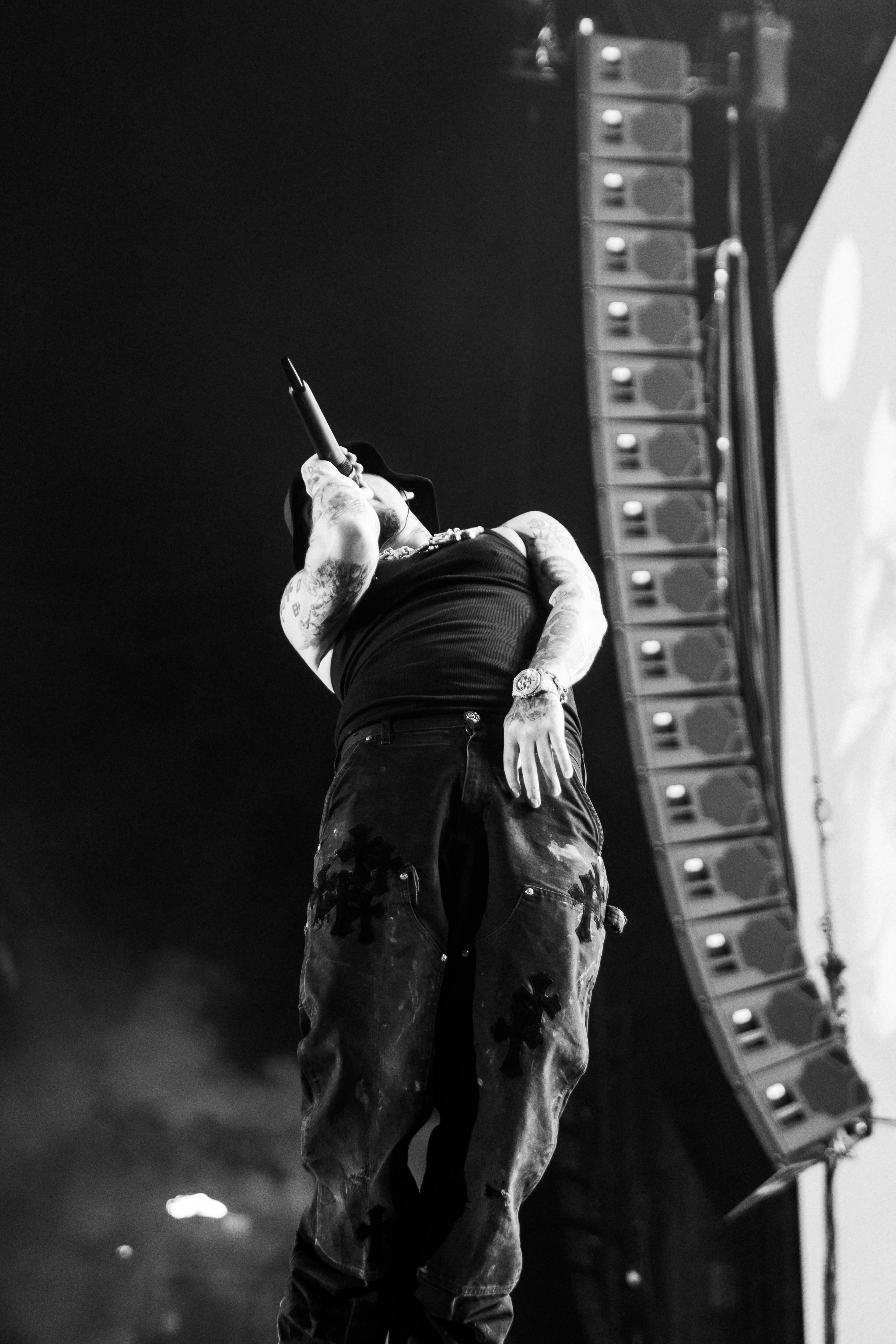
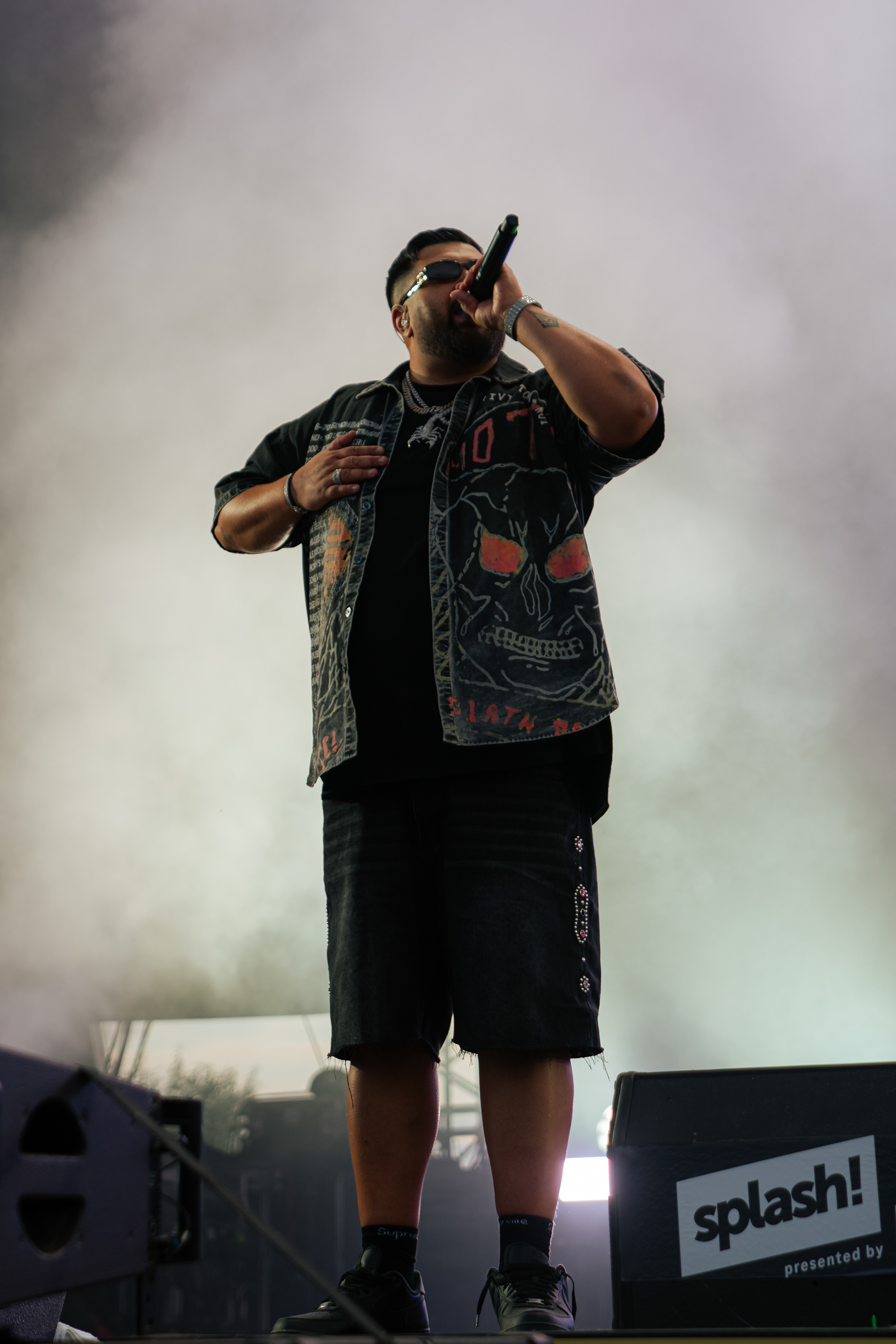
Global Voices, Local Impact
One of the most telling aspects of splash! 2025 was how naturally international perspectives blended into the festival narrative. Hanumankind, performing outside the mainstage spotlight, demonstrated that relevance is no longer dictated by geography. His viral track “Big Dawgs,” including the remix featuring A$AP Rocky, connected instantly — not because it followed trends, but because it communicated urgency and identity.
Behind the scenes, these global connections felt equally tangible. Badchieff spoke casually about spending time with A$AP Ferg, illustrating how international exchange has become routine rather than exceptional within HipHop culture.
Ferg’s own appearance later that weekend carried an interesting tension. Despite a smaller-than-expected crowd, his performance was marked by composure and intent. Without relying on hype or nostalgia, he built a connection through presence alone — a reminder that cultural influence does not always align with current algorithms.
Between Legacy and the Next Wave
Throughout the weekend, splash! repeatedly highlighted the dialogue between past and future. Young Thug created an intimate moment by bringing his sons on stage, blurring the boundary between performer and private individual. BigXthaPlug showcased the confidence of an artist still ascending. And Yeat closed the festival with a set defined by intensity and control — loud, abrasive, and surprisingly focused.
German artists were never overshadowed. Performances by Majan, BHZ, Jassin, and Makko emphasized how deeply rooted local HipHop has become. One of the most resonant moments unfolded on a smaller stage, where Celo & Abdidelivered a performance that felt less like a concert and more like a history lesson — lived, not narrated.
What Remains After the Dust Settles
splash! 2025 was physically demanding. Heat, dust, noise, constant movement. Yet that exhaustion felt inseparable from the experience. HipHop has never been comfortable, and the festival did not attempt to make it so.
What stood out most was the growing expectation placed on artists, particularly international ones. Name recognition alone is no longer enough. Audiences demand effort, authenticity, and interaction. Those who delivered were rewarded. Those who didn’t faded quickly.
In the end, splash! 2025 didn’t try to define HipHop. It allowed HipHop to define itself — messy, contradictory, inclusive, and alive. And perhaps that is the festival’s greatest achievement: creating space where a culture in constant motion can simply exist, without explanation.
created by @jonas.kathan