
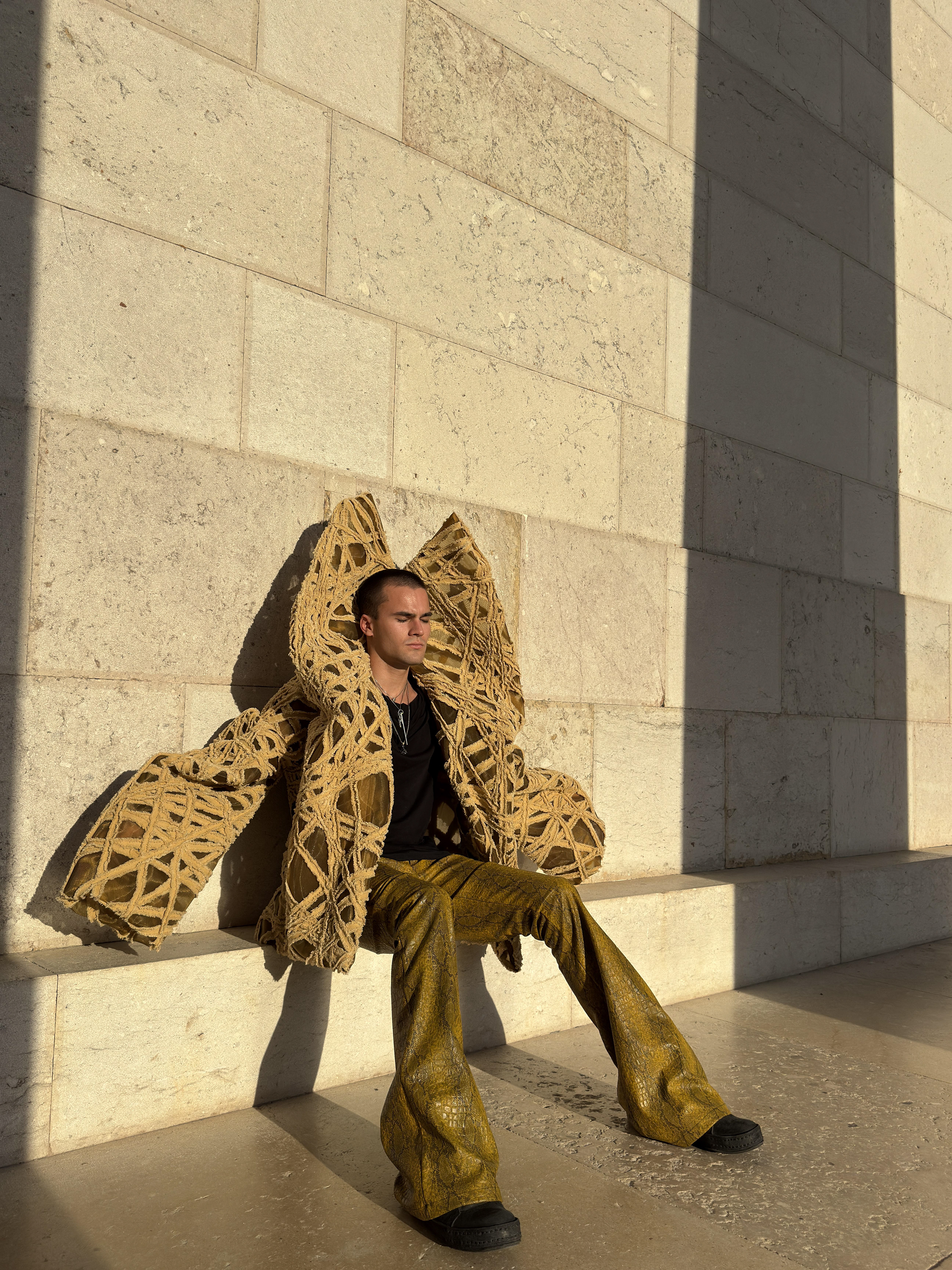
Matti never planned for fashion to completely take over his life. Growing up in a small village in Swabia, clothing first existed more as a background presence than a clear career path. Yet looking back now, fashion and textiles were always surrounding him. His mother studied clothing technology and worked in the textile industry, while both of his grandmothers were deeply connected to sewing. One of them even taught sewing classes for more than 25 years.
“It’s definitely in my blood,” he says. “But even though I was surrounded by it, I barely sewed until Covid.”
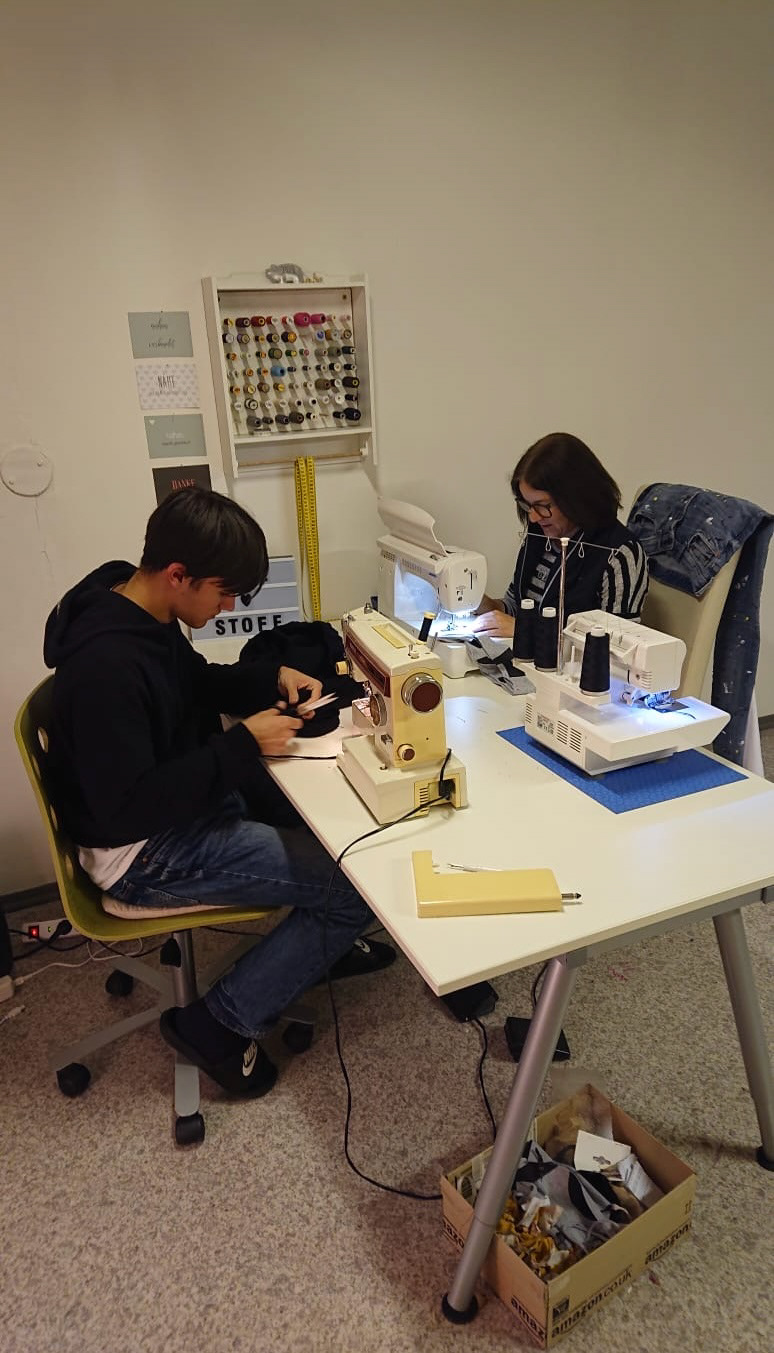
That changed during the lockdowns in 2020. While the world slowed down, Matti started making customized face masks during the shortage, experimenting with graphics and prints using his mother’s plotter. Only a few weeks later, he tried sewing a hoodie for the first time. What began as curiosity quickly became obsession. By the end of the year, he had produced around 90 garments entirely on his own.
What makes Matti’s process interesting is how intuitive it still remains today. He never formally studied sewing or pattern making and largely taught himself through experimentation, YouTube tutorials, analyzing existing garments, and endless trial and error.
“I honestly still work like that today,” he says. “I never really sketch things beforehand. I just have a rough outline in my head, and the details come together during the process.”
That process often involves mistakes, failed samples, and moments where pieces do not fit at all. Yet Matti sees this unpredictability as part of what makes creating exciting. At the same time, he cares deeply about construction quality and finishing details. While raw edges and imperfect elements sometimes intentionally appear in his work, craftsmanship remains extremely important to him.
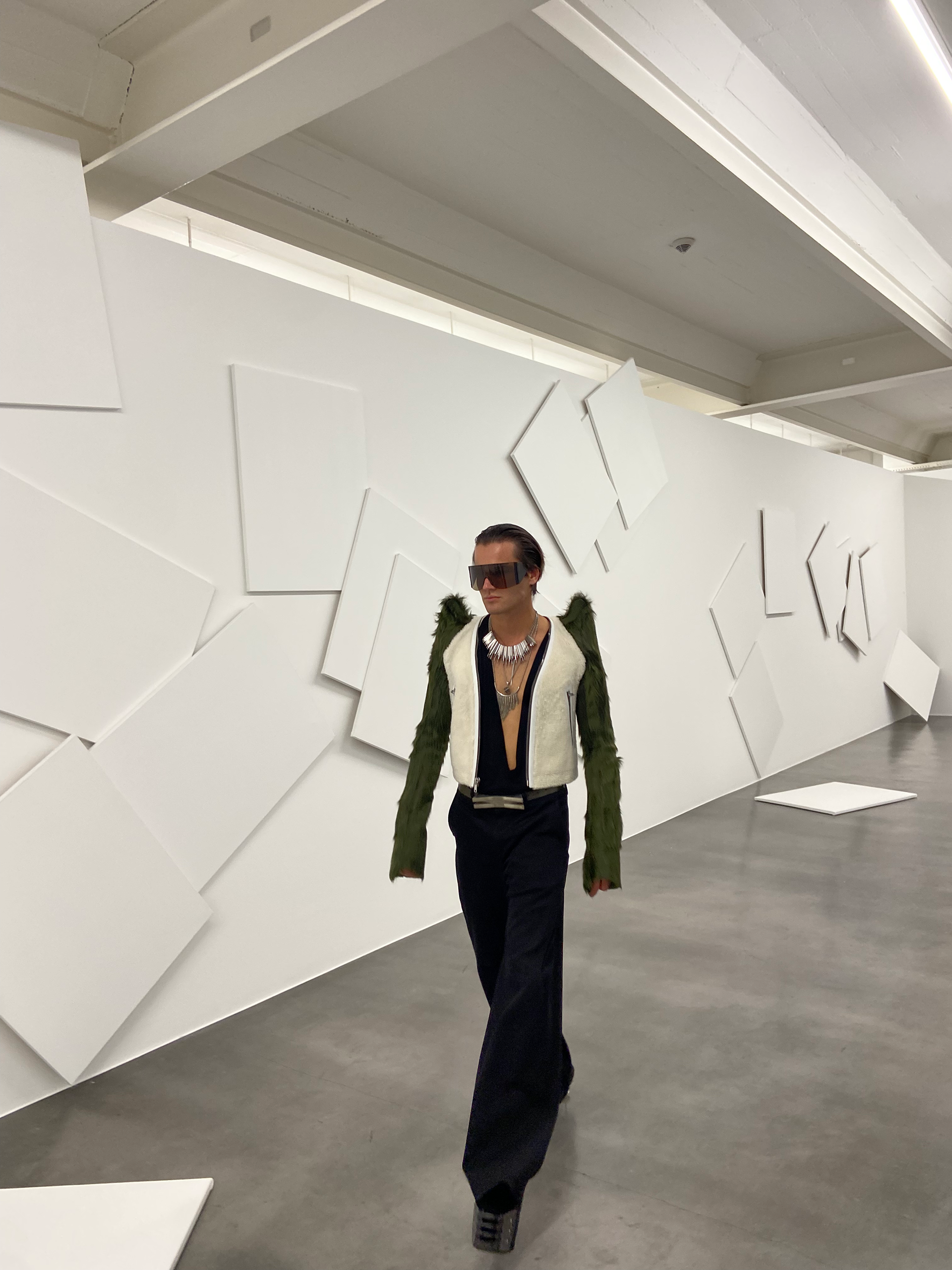
One piece that best represents his current design language is his “Twisted-Knee Pants.” The silhouette appears subtle at first glance, but the construction itself is highly unconventional. Instead of relying on traditional inseams or outer seams, the pattern twists around the leg and follows the natural shape of the knee through multiple darts and curved sections.
“It’s probably the piece that feels most like me right now,” he explains. “I’ve made six different versions of it already.”
Although Matti creates his own garments, he does not strictly define himself as only a designer. His relationship to fashion exists across several different roles simultaneously: collector, curator, designer, archivist, and community organizer. Over the years, he has built an archive of nearly 1,000 pieces, ranging from self-made garments to avant-garde designer clothing and rare finds.
“Most things are definitely a reflection of myself,” he says. “But at the same time, the collection is also part of my work now.”
Not every piece is personal in the same way. Some garments exist as styling references or archive additions, while others carry strong emotional attachment. If he only looks at the roughly 300 pieces that permanently remain part of his personal wardrobe, however, he says they represent him completely.
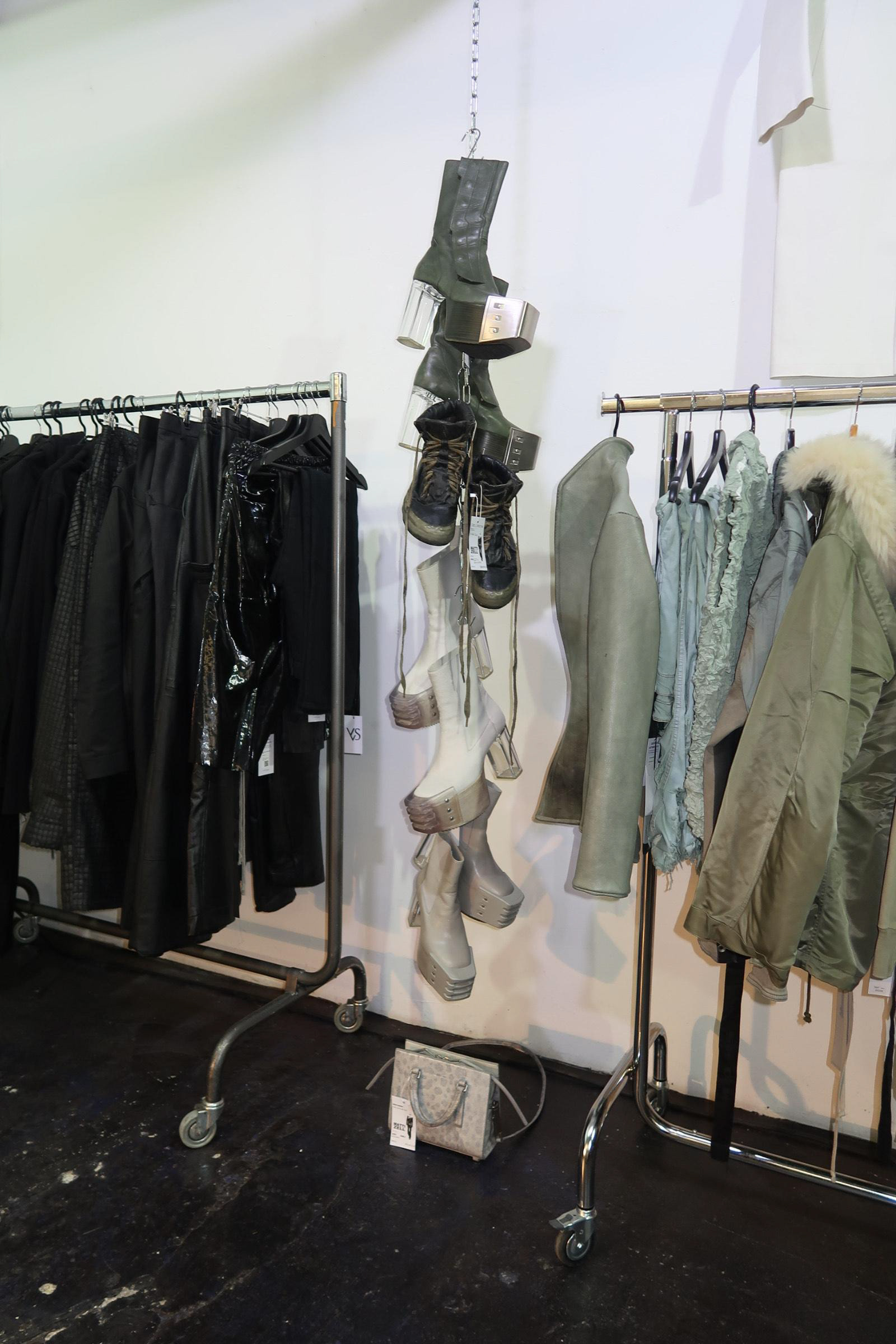
His perspective on fashion shifted significantly after discovering designers like Rick Owens, Vetements, and Raf Simons during his teenage years. A trip to Milan in 2017 became especially important. While walking toward Antonioli with his parents, he noticed a couple wearing Vetements hoodies and Rick Owens Geobaskets.
“I remember thinking the shoes looked insane,” he says. “And then a few minutes later I saw them again inside Antonioli and found out they were Rick Owens.”
That moment started years of collecting Rick Owens pieces, eventually including multiple pairs of Kiss Heels and technical runway garments that completely changed how he viewed silhouette and dressing.
“Back then, I realized how unconventional clothing could actually be,” he explains.
At the same time, learning how garments are technically constructed also changed the way he looks at fashion itself. Instead of focusing only on visual impact, Matti now pays close attention to pattern cutting, proportions, and workmanship.
“Nowadays I often look more at the pattern construction than how flashy something is,” he says. “Even if something looks simple, there’s usually some kind of twist in the construction.”
This deeper technical understanding also made him more aware of the realities behind the fashion industry. While avant-garde runway pieces often receive the most attention online, he recognizes that basic products and logo items financially sustain many luxury brands.
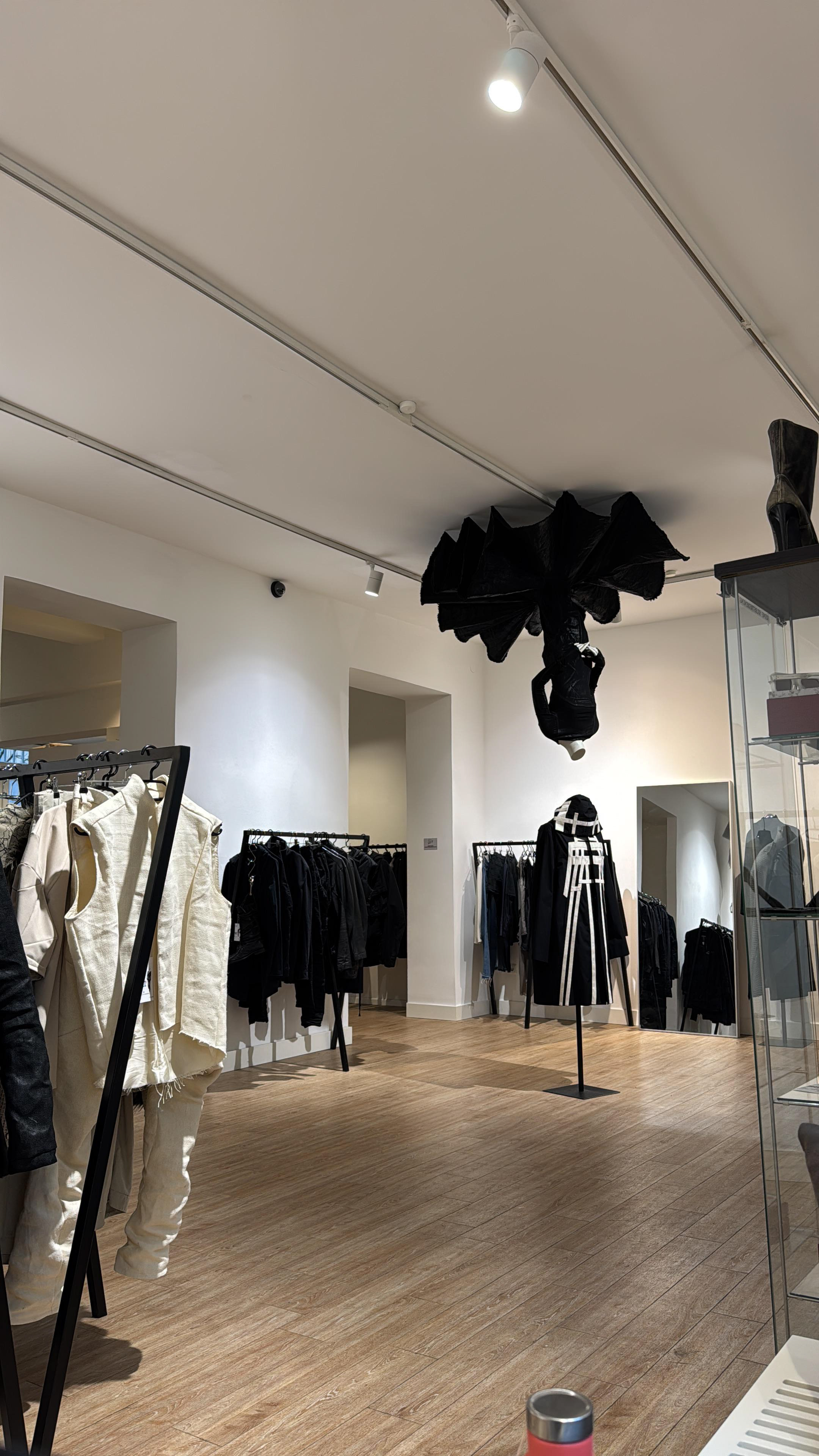
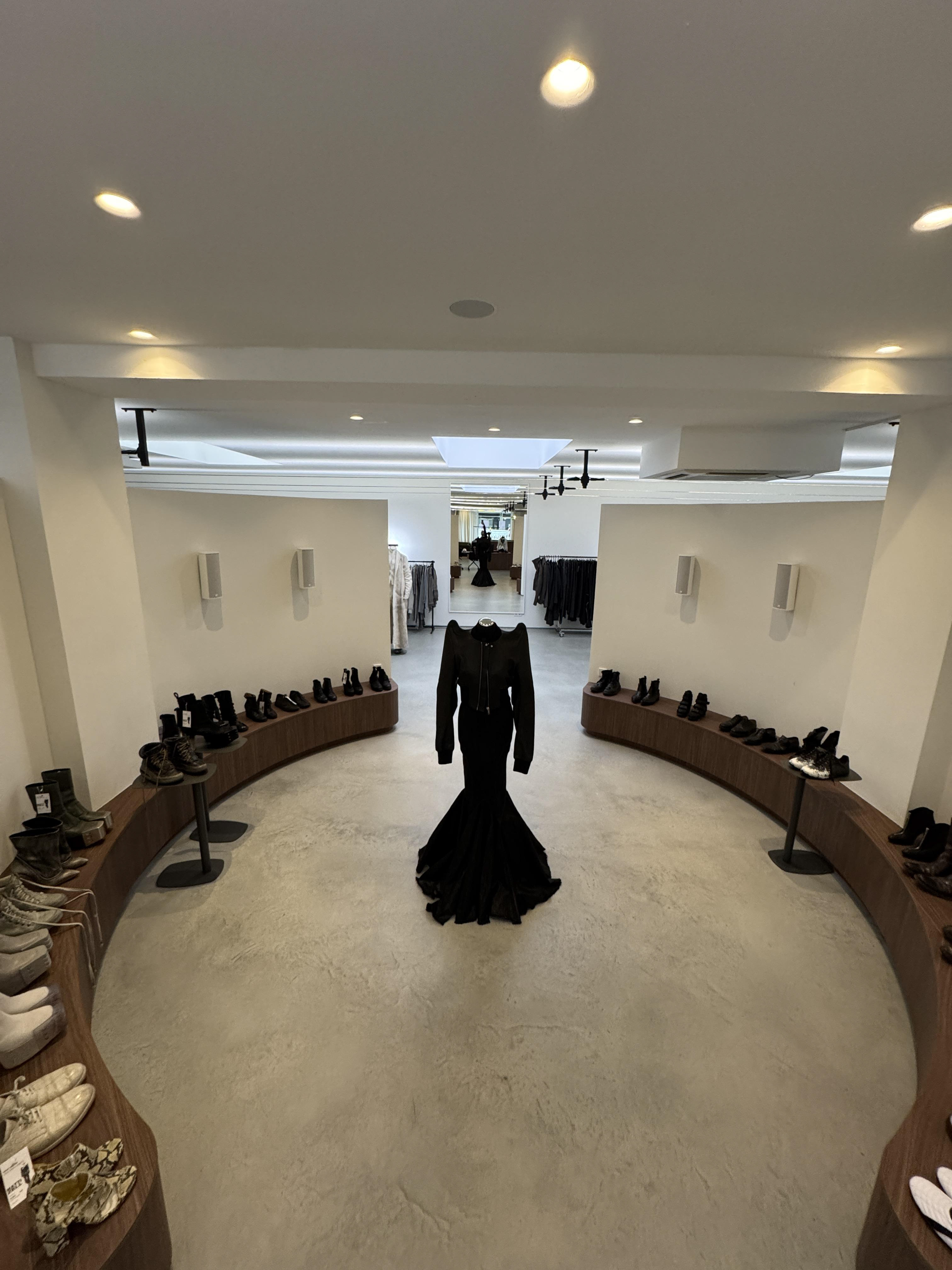
Beyond collecting and designing, Matti’s current focus lies heavily in the pop-up spaces he organizes across Germany. Importantly, he does not describe them as stores.
“I don’t see them as shops,” he says. “For me, they’re spaces.”
These spaces are intended to function more like galleries where visitors can experience clothing physically rather than simply consume it online. Guests are encouraged to touch garments, study details, and try on pieces that are often impossible to see in person otherwise.
“Fashion lives through materiality,” he explains. “You can’t really experience quality or construction through a screen.”
Creating an atmosphere where people feel comfortable is equally important to him. Despite being deeply involved in fashion culture himself, Matti often feels unwelcome in traditional retail environments because of how intimidating or exclusive they can feel.
“That’s why I wanted to build spaces where people actually enjoy spending time,” he says. “Where they can talk to each other, connect, and just experience fashion differently.”
Collaboration also plays a major role in these projects. Matti regularly works with photographers, jewelry artists, and other creatives, using the spaces to showcase not only clothing but broader creative communities.
At the same time, he remains critical of the current state of fashion culture online. Social media, in his view, has fundamentally changed how people develop taste and identity.
“I think taste comes from all the impressions you consciously and subconsciously absorb,” he says. “But now there’s such an oversupply of content online that personal style development often gets interrupted.”
For many young creatives, fashion has become increasingly performative. According to Matti, the pressure to constantly create more content, stand out visually, and remain relevant online often pushes authenticity into the background.
“Five years ago, doing something creative online felt much more special,” he says. “Now there’s a huge oversupply of brands and creators, so everyone feels pressure to constantly do more extreme things.”
Still, despite these frustrations, he believes a counter-movement will eventually emerge — one centered around craftsmanship, creativity, and genuine human expression.
“I think people will eventually realize that otherwise life becomes very sad and impersonal,” he says.
This tension between passion and exhaustion also appears in the way Matti currently speaks about fashion itself. After years of constantly surrounding himself with projects, collecting, organizing, sourcing, studying, and creating, he admits that fashion sometimes feels more overwhelming than exciting.
“Right now, I honestly see a lot of it more as a burden,” he says. “I overloaded myself too much over the last months.”
As a student currently finishing his bachelor’s thesis in International Fashion Business while simultaneously managing pop-ups and creative projects, balancing everything has become difficult. Yet he still believes the excitement will return once some of that pressure disappears.
What continues motivating him most are the people and connections formed through these spaces and projects.
“That energy comes back when I see people reacting positively to what I do,” he says.
Ultimately, Matti’s work is not only about clothing itself. It is about creating emotional experiences around fashion - spaces where garments become conversation pieces, memories, creative experiments, and forms of connection. Somewhere between archive, craftsmanship, and obsession, he continues building a world where fashion feels physical and personal again.